



Subscribe to our newsletter
Subscribe to get exclusive insights, invites, and expert tips from the Localintel team.
Oops! Something went wrong while submitting the form.


.png)
That’s how John Regan, Director of Economic Development for Norfolk County, described Localintel’s new AI-powered location content platform after getting access and putting it to work immediately. In fact, on day one he used a story available in the platform to respond to a real question – copying the text, making minor edits, and sending it out. He said he simply couldn’t have done that before without pulling others away from their priorities to draft something quickly.
Economic development teams are expected to be fast, credible, and persuasive – often with limited time and internal capacity. Localintel’s 2025 survey of 200+ economic developers found that over half create or share data-informed content weekly or daily, and 95% say it’s important to their success, yet only a small fraction feel expert at turning data into high-quality content. Many struggle to find the right data, interpret what it means, and shape it into usable charts and stories under tight timelines. Norfolk operates in exactly this environment.
The team has built an award-winning web presence and takes pride in how they communicate “why here” but like many organizations, they still face constant requests from council, investors, partners, local businesses, and internal stakeholders, often on short notice.
Before they had access to the new platform, Norfolk already used Localintel’s Economic Development Tools – interactive data visualizations embedded into the “Norfolk Advantages” page on their website. Those widgets gave the county a dependable, public-facing layer of up-to-date, interactive visuals and data that strengthened the “why Norfolk” story and helped keep audiences engaged.
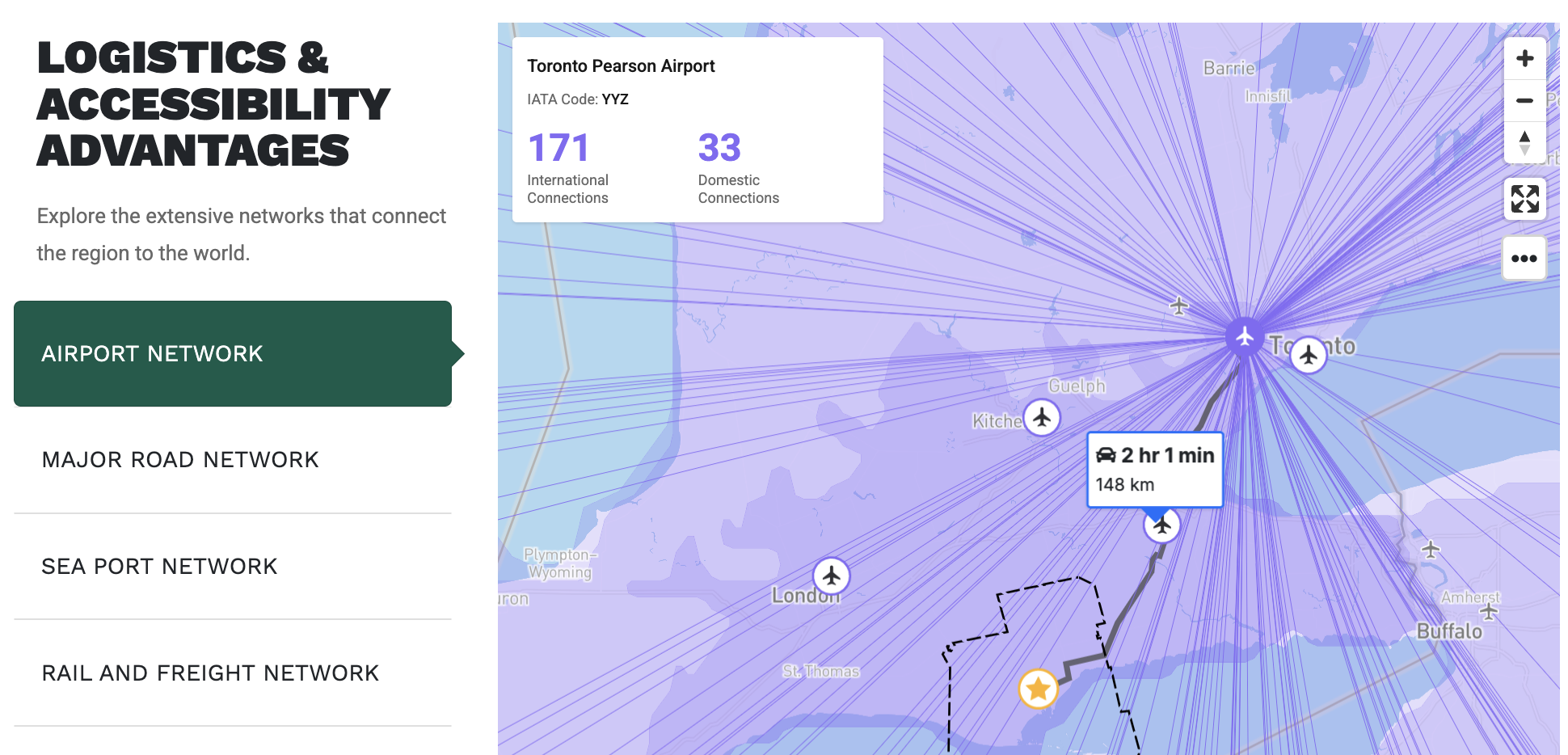
But as effective as embedded tools are for public storytelling, Norfolk still faced a familiar internal challenge: turning data into usable content for briefings, reports, memos, newsletters, and stakeholder requests, and doing it quickly.
“literally like having an economic development analyst on staff – a virtual one.”
With the new platform, Norfolk now has access to much more than embedded tools. The platform brings multiple content types together – including reports, profiles, stories, charts, maps – and folds the embedded tools into a broader, always-on content engine. Instead of starting with a blank page or hunting through multiple sources, the team can pull building blocks (i.e. draft narrative text plus supporting visuals) and adapt them for the deliverable they’re trying to produce. John captured the value in plain language: “There’s no digging, there’s no guessing… it’s real time.” He described the experience as “literally like having an economic development analyst on staff – a virtual one.”
Blaire Sylvester, Business Development Coordinator, leads much of Norfolk’s outward-facing content – website news, newsletters, and related communications. Within the first week of access, she selected a story from the platform that she used to create a news article for the website, pairing it with a chart from the platform.

That’s a meaningful shift because publishing data-driven content often doesn’t happen – not because it isn’t valuable, but because it’s time-prohibitive. As Blaire put it, “To be honest, I haven’t even posted too many stories or news articles on the website with data points because I just don’t even have the time to collect them.”
"Going forward, this will be able to allow us to post more content about the county itself… which would be really positive.”
She explained that without Localintel, it would mean “trying to navigate StatsCan and find the data… [which] would have taken a great deal of time,” and in many cases they simply hadn’t done it before “because there hasn’t been the time.” With the platform, she expects that to change: “Going forward, this will be able to allow us to post more content about the county itself… which would be really positive.”
The platform also helps Norfolk respond quickly when unexpected requests come in. John described being asked a question in a real situation and finding that the platform already had a relevant story. “Essentially I copy and pasted, did very minor edits to it… and sent it off,” he said. “And I couldn’t do that before.”

For a small team, that’s not a convenience – it’s capacity building. It reduces the number of times urgent questions force staff to stop what they’re doing to assemble a quick, defensible response. It also means more answers can be grounded in the same governed, consistently updated data, rather than ad hoc research each time.
In economic development, the workload doesn’t arrive neatly packaged. The same core facts and narratives get reused across slide decks, reports, one-pagers, stakeholder emails, web updates, and newsletters, often under time pressure and scrutiny.
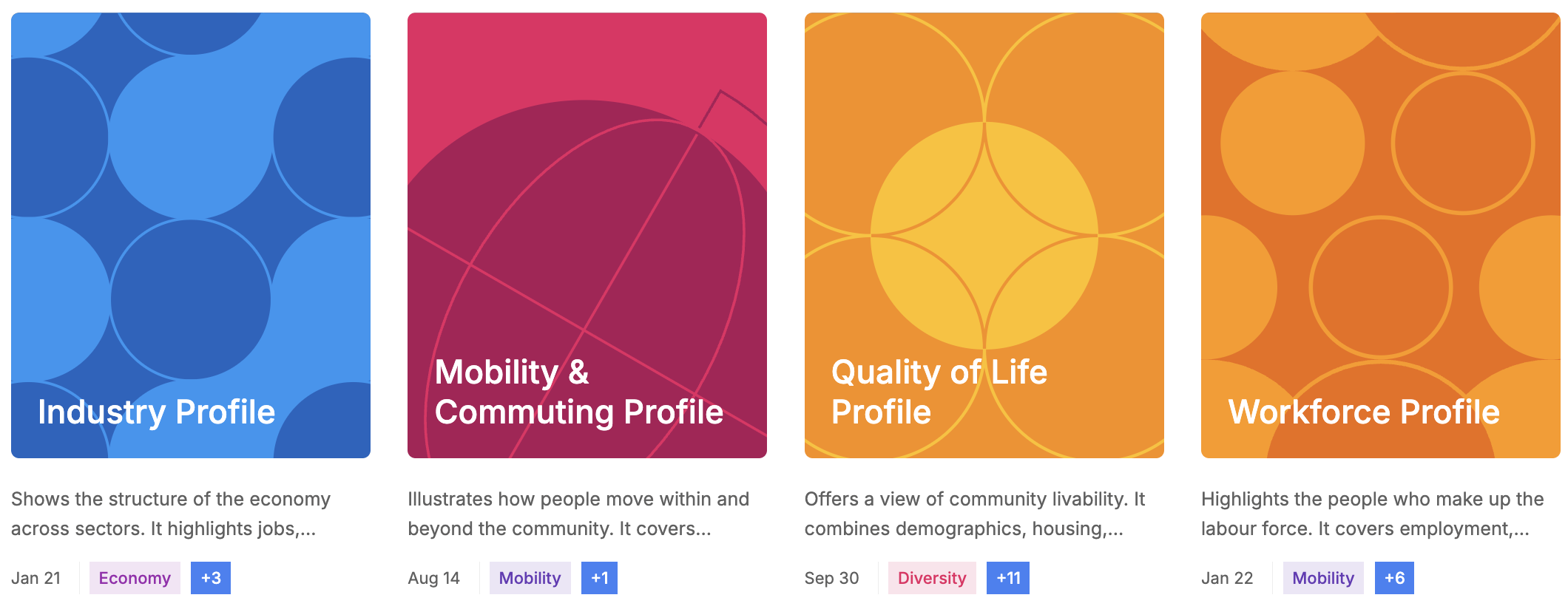
Localintel’s platform is designed for that reality: it supplies credible, ready-to-use content building blocks that teams can adapt, rather than forcing them to repeatedly research, draft, and design from scratch. Internal analysis suggests the platform replaces hundreds of hours of manual content work each year across research, drafting, and design.
“fast, credible insights we can use immediately.”
Because the platform is built on a governed, up-to-date data layer, Norfolk can use the content in public-facing channels with more confidence than generic AI outputs. They can start from standardized stories, charts, and maps, then apply their local voice and judgment to fit each audience. As John put it when talking about briefings and stakeholder meetings, the platform provides “fast, credible insights we can use immediately.”
Even in the early days, the team already sees where the platform can support their ongoing workload:
Briefings, reports, and stakeholder meetings: Using platform insights and visuals as starting points for council updates and partner conversations.
Newsletter and social content: Pulling timely stories, charts, and maps into recurring communications.
Work tied to land and investment readiness: Using reports and visuals as inputs into larger packages and studies.
Inquiry response: Producing faster first drafts and better visuals when businesses, partners, or council ask questions.
As Economic Development Coordinator Lindsay Kalliokoski summarized, the platform acts like an “enhanced portfolio”, taking facts and data and presenting them in a way that’s easier for more audiences to understand. She described it as a bridge between content and statistics, helping teams communicate with people who aren’t specialists, without sacrificing credibility.
Norfolk County’s first-week experience shows what a “fast start” can look like: embedded tools that strengthen public-facing storytelling, plus a broader platform that helps teams produce and assemble content for real deliverables, faster and with more confidence.
If you’d like to see how this could work for your community, we’re happy to show you Norfolk’s examples and how they were created in just a few minutes. This is especially relevant if your team is small, your content expectations are high, and your time is limited.

Welcome to a whole new way to communicate your location’s advantages.
